Showing posts with label Advanced Myotherapy Carlton. Show all posts

Saturday, 4 April 2015

Surgery Prevention


“Doctors told me I needed surgery.  Now they are scratching their heads at my recovery.”…was the feedback we received after working with Grant, who’s follow up MRI scan revealed complete structural recovery.
After a very different prognosis from the medical professionals, Grant was referred to Advanced Myotherapy through a friend.

While an initial MRI scan showed a herniated disc causing nerve impingement, a few short months later, a new scan showed the spinal discs had realigned after the much needed corrective care, that not only was non invasive, but saved Grant from costly surgery.
Since then, Grant regained feeling in his legs where there was numbness and tingling down to his feet, and began to live more fully again.
Regardless of how an injury is sustained, there are basic principles of recovery that allow muscle and bone to heal faster. Regaining musculoskeletal stability by increasing both length and strength of the muscles is key to restoring range of motion (ROM) and mobility after injury.
Another key element of healing after injury is sufficient rest which is something most people don’t realise. Returning to normal duties at work or getting back to sport as usual too soon will prolong injury recovery where further rest often times speeds up the return of muscular stability.
Myo (muscle) therapists encourage people to ensure they reduce physical activity for a sufficient amount of time before re-introducing specific exercises that build up muscle fibres to original strength while undergoing a treatment to break up any acquired scar tissue. What this type of treatment does is free the area of injury from trauma and restriction that ultimately ends up causing further damage left untreated or unhealed, further down the track.
Myotherapists also offer education around corrective self care that reduces the likelihood of re-injury as well as helping to restore musculoskeletal integrity and general wellbeing. Many of our past, present and ongoing clients have found that even long standing injuries that reduced their quality of life, have dissipated after a speedy recovery with correct maintenance and treatment.
If you have a long standing or even recent injury, Myotherapy is a type of treatment that can help you recover fast and for the long term. For those who have never seen a Myotherapist, have tried all other avenues, we encourage you to inquire about how we can help. Many of our clients have found that after trying a multitude of modalities…finally they find results with us. So please don’t hesitate to call or email us to ask about your injury. We are always willing to chat.

Wednesday, 26 February 2014

Sciatic Nerve Pain – Sciatica

Advanced Myotherapy Carlton Remedial Massage
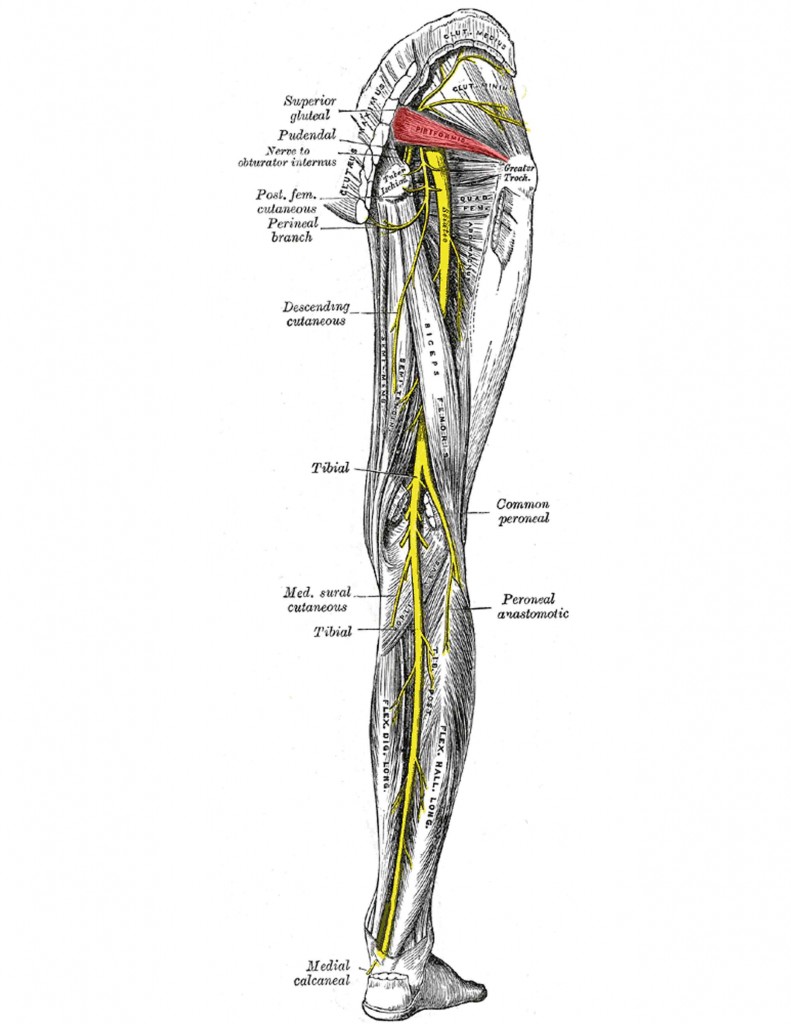
Understanding sciatica is key to helping heal faster and prevent the painful condition returning. So many people suffer needlessly with sciatica and with the right knowledge, it can be significantly reduced and reversed, even “remedied” with self care education, Myotherapy and Remedial Massage. Sciatica is the experience of sharp and shooting pain through the glut and down the leg, which can frighten a lot of people who do not fully understand what it is caused by.
Sciatica arises when there is an impingement of the sciatic nerve which is compressed by the discs of the lumber spine. How these discs come to close in and compress the nerve to create referred pain, is in being restricted by tight fascia surrounding the discs! That is how simple this condition is, and unfortunately so many people not knowing this will turn to medication.
The problem with pain drugs is that they do not treat the underlying cause of the pain as Myotherapy and remedial massage do. There are a number of leading factors that contribute to the onset of sciatica, which are assessed and addressed at our clinic Advanced Myotherapy Carlton. Understanding the biomechanics of the body is something we wish to instill in our clients, so as to facilitate long lasting results, through self awareness and lifestyle changes.
Some of the most important changes you can begin with today include regular (daily) corrective stretching. Focusing on the legs (particularly hamstrings) and gluts, to reverse sciatic nerve pain is essential to reduce pain and bring relief. Secondly, simply using a ball to lay on underneath the affected glut and hip, can help with “trigger point therapy”. Holding position where the pain is for several minutes or until fully released, can bring instant release.
The key to getting results with such self treatment at home is in holding both the stretches and the pressure of the (tennis sized) ball under the body for long enough to allow for full release. The trick can be not to release the stretch or remove the ball before this relief comes, so as to avoid “activating” the pain further. To avoid this, simply be gentle with yourself enough to be able to hold the position long enough for it to be effective in allowing the tight muscles causing the pain to fully “let go”.
Another incredibly effective self care method of treating sciatica is by applying heat (a wheat bag) to the area. Heat relaxes the tight muscles enough to let them soften to release the affected area, and take the pressure off the discs compressing the sciatic nerve. Along with these few very effective practical steps you can take at home, we use Myotherapy and Remedial Massage to manipulate the the surrounding area to allow softening and restoration of a better range of motion for less pain and restriction. This is the key to recovery when it comes to many neuro-musculo-skeletal conditions in the body that Myotherapy specialises in treating.

Wednesday, 3 October 2012

Myofascial Medicine for Muscle Health


As a Health fund approved clinic, you can claim with us on the spot to benefit from Private Health Insurance that doesn't roll over to next year.  Don't let your health benefits go to waste.

Providing Self Care Education and Myofascial Medicine for a Pain free life, Click here to read what people are saying about Advanced Myotherapy.


We target the muscles that are causing / contributing to pain and though little known, most lower back and hip pain is due to tight Psoas muscles, deep in our  pelvis.
  

Our aim is to educate you in how to identify and reduce such pain. From Sciatica to herniated discs and degenerative joint disease, tight hips can cause many issues including knee pain/degeneration. To become pain free, we must regain lost mobility in our hip muscles and joints. The number 1 rule is to never strengthen when you have pain or loss of mobility, or you will cause more pain, degeneration and increased loss of mobility. Many exercises and stretches can be harmful if there is any spinal damage and it's important to know what not to do in order to prevent further degeneration. At Advanced Myotherapy, we promote correct self care to increase the results of Myofascial Medicine.  

 Benefits of Myofascial Medicine Regain lost mobility in muscles and joints Takes stress off joints to prevent unnecessary degeneration Decrease and eliminate muscle pain Improved posture and balance Takes painful toxins (lactic acid) out of muscles Prevents injuries   To discover more, check us out on facebook & twitter. Also remember to check in on facebook next visit for exclusive offers. Like us here   

Sunday, 1 July 2012

Kick that pain in the butt


Glut and Hip pain is caused by stiff muscles surrounding the weight bearing hip joints. Lower back and pelvic tilt issues can also contribute to hip problems and at Advanced Myotherapy we have a number of effective techniques of tackling the root causes of these imbalances for lasting results.  

We have helped many people avoid taking pills or resorting to surgery for issues like sciatica and hip problems, which has often times been the very first recommendation. With correct treatment and self care advice many of our patients have been able to recover from such problems with ease. 

Hip pain and glut tightness can come from trauma to the area from accidents, slips or other types of injury, causing problematic symptoms like sciatica and nerve root compression. In some cases hip pain is developed due to a lack of strength where as glut tension can be a result of inflexibility or incorrect sitting posture.

The nerve roots compression that develops sciatica and hip pain can lead to serious long term degeneration and premature ageing. What we do at Advanced Myotherapy is find the cause of the such problems by making a thorough assessment, so as to direct the approach of treatment.

Our treatment is advanced with prescribed self care to prevent further issues and pain as well as improve the issues at the core of the problem. 

To increase the speed of recovery from hip and glut pain it's important to maintain a healthy body weight and normal range of motion. Weight resistance training is an important aspect in avoiding injuries related to weakness and poor muscle health. We have a number of self care techniques that our clients swear by, in effectively treating glut and hip pain. If you would like to know how to kick that pain in the butt, give us a call today. 

We would love to hear from you if you have any questions and are looking to manage pain naturally without drugs or costly treatments without any real results. 


Wednesday, 27 June 2012

The Importance of Posture

The better your posture the more air can fill the lungs to help dissolve fatigue. Research from the Ohio State University in the US found that good posture is linked to higher confidence levels and overall wellbeing. 

Perfect posture is our passion and purpose to help awaken the mind-body potential through natural alignment. Advanced Myotherapy is devoted to the best professional practice in promoting the potential for greater energy and helping you get the most out of life. 

Alignment is the core foundation of energy flow, longevity or in other words "prevention of premature ageing" or resistance to gravitational forces, that are synonymous with older age and degeneration of spinal strength. Spinal health is the birth place of nerve control, functionality and life connection which gives us every little aspect of physical movement and responsiveness that allows energy to flow through the body. 

Like the sails of a yacht controlling the steady balance of the sail in the wind, the muscles are the foundations that support the movement and resilience of the body's structure under the force of gravity. Muscles join bone to bone, controlling the movement of the spine which is the most influential channel through which all CNS (central nervous system) - brain / neural messages are sent and received. Like the telephone line, the spine, held strong by the muscle movements...is the vessel through which our vitality and physical intelligence gains momentum and strength. 

It's undeniably evident that good posture develops healthier appearance, brighter outlook, increased confidence, ability, resilience, agility, more youthful radiance and the invaluable immunity to stress build up. The number one cause of death, associated with mental health issues, stress is predominantly prevented with the support of healthy brain function. Good posture is like a face lift, but one that includes the body, giving you an air of health because one who has physical alignment, benefits from the freedom from pain and stress accumulating in the body and mind. Most people have the ability to regain good posture with the right help and corrective treatment.

People that have come to us have reported getting more from their body than they ever have, even from their youth, when health may well easily be taken for granted and put last on the list of priorities. Bad habits however do set things in place to solidify and become stubborn, stiff and rigid, which speed up the ageing process which is less noticeable until we begin to degenerate and tire in middle age. The number one priority that instils good posture is standing tall. Not only does it make you look more confident and approachable, but it brings out your best mood! Opening the chest, helps open the heart space for others to connect. 

It is a sign of good character and honesty to look and appear open by standing tall and adopting bright, energetic body language. Our body stance and stature says a lot! You cannot put a price on the freedom from pain.


Tuesday, 26 June 2012

Give foot pain the boot


Pain in the facia area underneath the foot, often comes from long term posture imbalance through activities that cause misalignment of the centre of gravity / core of the body. This results in strain on the planta facia which is the biggest risk factor  of insufficient sports recovery when it comes to planta faciitis / heel pain. Advanced Myotherapy combine various modalities and techniques in the effective treatment of Planta Faciitis, otherwise experienced as Heel Pain. Taping is one method incorporated in the maintenance and recovery of this condition.


One cause of Planta Faciitis/ Heel Pain, is the gradual wearing down of the fat padding in the heel, which causes nerve irritation. This is why sufficient rest is a crucial part of successful recovery from this injury. Home self care is a vital aspect of effective rehabilitation from Planta Faciitis, as it is an injury brought on initially by lifestyle factors over time without enough recovery from sporting activities and poor foot wear.

Planta Faciitis/ Heel Pain is often quite a painful and restrictive injury that can also be a result of poor fitting foot wear or long term wear and tear from endurance sporting activities like running, as well as insufficient recovery and rest. The effective treatment of Planta Faciitis involves not only Myotherapy techniques and modalities, but the vital role of guided, correct self care and home maintenance.


Foot wear can be a major contributing factor leading to Planta Faciitis/ Heel Pain. This is one of the first factors considered in the successful treatment and rehabilitation of this injury. At Advanced Myotherapy we promote client commitment in their own self care and recovery, which speeds up the process of rehabilitation. There are also great stretch that help release the tightness in the planta facia that can make a huge difference when done correctly.

Rolling balls underneath the facia is a very effective method in relieving the pain associated with planta faciitis. Advanced Myotherapy regularly offers personal condition coaching around the successful recovery and rehabilitation of injuries like Planta Faciitis. Downward dog is also one of the most effective Yoga postures in releasing the facia and relieving heel pain that comes with this injury.

Planta faciitis is a result the connective tissue in the planta facia essentially being worn down or tight, and can be a very painful restrictive injury if not treated properly. Planta Faciitis is much of the time a matter of wear and tear after long term overuse in endurance sporting activities such as running or wearing poor quality shoes such as high heels. If you suffer heel pain or planta faciitis, call us or visit us today for a consultation to find out more about how we can help on 9347 5764 or www.advanced-myotherapy.com 71 Elgin Street Carlton.

Pelvic Tilt & Back Pain


Top 5 causes of the dreaded pelvic tilt that contributes to lower back pain:

1. Weak hamstrings
2. Weak abdominals
3. Weak glutes
4. Tight erector spinae
5. Tight hip flexors

The answer? Lengthen & strengthen! Want better posture? Stretching and exercising are the two most vital keys. Being fit beats being "skinny or slim" and by no means are they the same thing. Fit people come in all sizes, but generally as you will see looking at the image here, their shape indicates a better resistance to gravity and more grace of movement. 


Sitting wrong or for too long is another leading cause of the pelvic tilt, given that over time, it tightens the hip flexors which places pressure on the lower back. Most of the people we see that come to us with lower back pain have very tight hip flexors, which is a result of desk work. 

As you can begin to see, there are two essential elements in maintaining good posture and preventing premature shortening of the spine, along with other signs of ageing. These are "stretching and strengthening". The longer and stronger the muscles, the better health we have as these promote better health all round in allowing freedom of movement and increased range of motion. 

Myotherapy works to do just this, in assisting clients to restore the perfect posture by adjusting the spinal alignment with the support of muscle balance and integrity. Myotherapists are becoming more and more popular in finding solutions to musculoskeletal imbalances and conditions because they treat both together by providing the body's structure muscular support to hold the bones in correct positioning. 

If you have a posture problem and associated pain and wish to avoid depending on costly drugs or time off work, call us today for a consultation on 9347 5764 or visit www.advanced-myotherapy.com

Monday, 25 June 2012

Knee Pain

Knee pain, runners knee and ITB syndrome are all problems associated with the knee which can mostly be treated without drugs or surgery. Soft tissue injuries around the knee can easily be treated with the R.I.C.E method of Rest, Ice, Compression and Elevation. When related to arthritic problems, heat and movement help enormously to heal the condition and the faster you seek treatment the earlier recovery will be possible to avoid developing greater severity of the problem. 


It is recommended that sufferers of knee pain and conditions such as those listed above only perform low impact exercises that strengthen the muscles without injuring the joints (swimming, cycling, walking). A muscle strengthening program is essential in recovering from knee problems to avoid surgery which often results in degenerative disorders. 

Degenerative changes such as osteoarthritis are more likely to develop if knee surgery takes place. Myotherapy is recommended for muscle tears to help restore integrity and strength around the area without having to resort to toxic drugs or intrusive surgery.

Most sprains of the ligaments heal fast if the client follows a Myotherapists advice and recovery program which includes self care exercises. In cases where the ITB is affected and causing restriction, strengthening and stretching exercises help the process of recovery, alleviating the IT band pain. People often think that training will only make things worse when it comes to knee problems however this could not be further from the truth. 

Training the hamstrings and inner and outer thigh can help significantly in the healing of knee problems. Strength and flexibility are key to restoring balance to any musculoskeletal condition. Daily movement no matter what, is essential to keep things functioning properly, and where there is resistance, you must have persistence, in getting things back to normal.  
Problems such as Patellar Tracking Disorder come from an imbalance in the knee that causes the kneecap (Patella) to tilt as the leg angles bend which result in chronic and acute types of pain. Often the problems are a result of weakness in the thigh muscles (quadriceps), overuse, RSI, strain, trauma to the area or a growth spurt. The key is allowing the knee to rest when it is aggravated while strengthening the muscles around it to restore normal tracking and repair damage, with correct guidance and technique. 


Thursday, 21 June 2012

Shoulder Pain


From frozen shoulder to sprain and inflammation, shoulder pain is a result of a wide range of factors. Most clients we see for the first time with shoulder complaints have had this pain for any length of time, and have spent many wasted dollars trying different forms of therapy and treatment. 

Sometimes they will have suffered months, even years with this condition without successful recovery because many practitioners simply address the symptoms and rarely the underlying cause. Because of this the person only gains short term relief  from the treatment and rarely any long term results and benefits. 

Our priority lies in addressing the underlying reason / roots of shoulder pain to determine whether is comes from postural imbalances, muscular imbalances or injury, so that we can treat not just the pain, but also the cause for immediate and long term improvement and pain relief.  

Chronic and ongoing shoulder pain originates from muscular imbalances which irritate the function of the shoulder joint. This can come from stiffness in the pectorals at the front of the chest or between the shoulder blades (rhomboids). Releasing these tight muscles with deep tissue myofascial therapy alongside strengthening self care exercises, is affective in correcting such complaints.

In chronic cases where someone has tried all other forms of treatment with no success, we find that the cause is often related to other areas of tension and imbalance. In such cases we treat the body holistically to restore balance overall and alleviate pain rather than isolating the symptoms. 

Assessing the muscles in the hips and back will also be essential in working with such problems, to address and issues where lengthening and strengthening is needed, which eradicates postural imbalances. Once bi-lateral treatment restores postural balance, clients will become free from the cause of such pain and will no longer suffer with this condition. 


Tennis Elbow / Lateral Epicondylitis


Tennis elbow is a common  injury associated with overuse causing pain in the outer elbow and back of the forearm. This group of muscles work to extend and bend the wrist and fingers. 

Contraction of the forearm extensors, causes tension through the tendon at its attachment to the lateral epicondyle. When this tension builds due to overuse or force, there is a risk of damage. Tennis elbow is a condition of inflammation and degeneration of the extensor tendon at its attachment to the outer elbow. Most often a result of gradual overuse, tennis elbow can however result from trauma to the area.


Causes of tennis elbow

You do not have to play tennis to have this condition. It is a condition associated with repetitive activities involving wrist extension against resistance. Usually caused by sporting activities and manual labour it is one of the possible repetitive strain injuries - RSI. It can also be developed from other activities involving repetitive gripping of the hand.

Often people develop tennis elbow from a sudden increase in activities that place stress on the forearm extensors or due to a change in these activities. Heavy lifting forceful gripping through the arm along with a history of wrist, elbow, shoulder or neck injury may also increase the likelihood of developing this condition.

Signs and symptoms

Symptoms may present as an ache and aggravating during activity involving these muscles. Tennis elbow is also painful when touched and can radiate down the forearm. Pain can range in severity and sharpness, depending on the range of activity. Normal daily activity such as turning a door knob can become painful in severe cases, developing a debilitating stiffness in the elbow. A thorough assessment and examination from a myotherapist can diagnose tennis elbow. 

Treatment

Myotherapy uses a variety of modalities in the treatment & prevention of Tennis Elbow. Applied pressure combined with the movement of the elbow, in addition to simple exercises & stretches which increase strength & flexibility of the affected area are important recovery factors in rehabilitation of the condition.  Controlled manipulation of the extensor carpiradialis is performed in treatment of tennis elbow to increase range of motion, blood flow and free the area to restore normal function. With correct treatment, most cases of tennis elbow usually recover within a few weeks. In more severe and chronic cases recovery can take up to a few months. Early motherapy intervention is therefore vital in speeding up recovery.

Contributing factors

There are several factors which can predispose people to developing this condition. These need to be assessed and corrected with direction from a motherapist.

 Some of these factors include:


  • insufficient sports recovery
  • excessive activity
  • poor sporting technique
  • muscle weakness
  • muscle tightness
  • joint tightness
  • poor posture
  • inadequate warm-up

Motherapy for tennis elbow

Motherapy treatment for this condition is vital to the healing process and reduce the likelihood of recurrence.

Treatment may involve:
  • joint mobilization
  • dry needling
  • heat treatment
  • self care education
  • technique correction
  • anti-inflammatory advice
  • corrective sport or activity plan